Abbeys, Barns, and Churches: Drawings of Medieval Architecture by Ernest Born
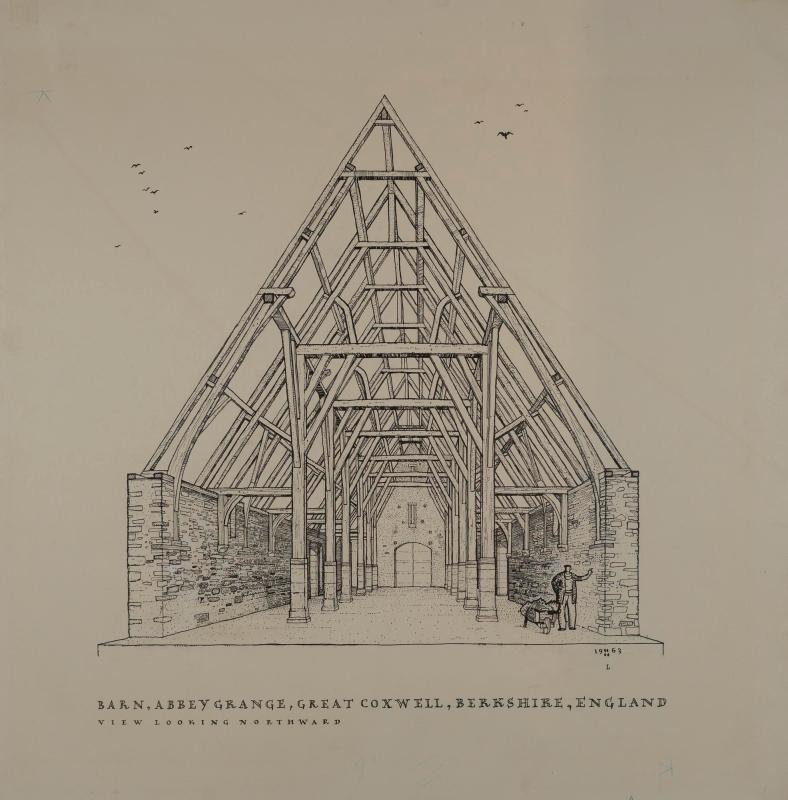
On View October 7, 2026 through February 28, 2027
SAN DIEGO, CA. This fall, the Timken Museum of Art invites visitors to view the Middle Ages through a distinctly modern eye. Abbeys, Barns, and Churches, The Building Blocks of Medieval Architecture, an exhibition of drawings by California architect Ernest A. Born, opens October 7, 2026 and remains on view through January 31, 2027 in the Timken's intimate galleries in Balboa Park. Comprising more than 20 meticulous studies in ink, chalk, pastel, and pencil, the exhibition follows one of California's singular architectural minds as he traces the appearance of stone barns, sprawling abbeys, and small parish churches of Europe.
Rethinking the Medieval
Popular conceptions of Medieval art and architecture are shaped by contemporary media. Today's adventure films and cable network series tend to offer inhospitable views of crumbling castles, dark cathedrals, and dreary monastic communities. Despite the proliferation of such imagery, we may ask: "How accurate are these impressions of Medieval buildings?" and "What can we still learn from the engineering feats of the past?" Abbeys, Barns, and Churches explores these questions by studying a variety of European structures, some still standing, from the 10th to 15th centuries. The original drawings by Ernest Born convey a very different story about this architectural tradition, one marked by ingenuity, endurance, and remarkable human craft achieved without the aid of modern technologies.
About the Artist
Ernest A. Born (1898-1992) was born in San Francisco and trained as an architect at U.C. Berkeley. After graduation, he traveled to Europe before beginning his professional life in New York City, where he contributed to a variety of important building projects, including the construction of the Empire State Building. Born's maturation as an architect took place in Northern California, however. There, he edited architectural journals, designed both modern residences and public transit stations in the San Francisco Bay Area, and drafted urban plans that spanned the mid-twentieth century.
Toward the end of his productive career, Born returned to his favorite destinations in Western Europe as part of a scholarly effort to painstakingly document Medieval building methods. Together with the renowned Medieval art historian Walter Horn (1908 to 1995), Born published multiple treatises on architectural monuments from the early Romanesque to the Gothic periods. Chief among those books was an epic, multi-volume study called The Plan of Saint Gall: A Study of the Architecture and Economy of
Life in a Paradigmatic Carolingian Monastery (UC Press, 1979). Many of the drawings from that project, as well as those from his earlier study The Barns of the Abbey of Beaulieu (1965), are included in this exhibition.
Notably, Born spent the last years of his long life with family in San Diego. Bringing his drawings to the Timken enables us to celebrate the journey of a somewhat overlooked figure within this region's distinguished architectural history. Institutions holding significant collections of his work include the Getty Research Institute, the Canadian Centre for Architecture, the Stanford University Library, and UC Berkeley's College of Environmental Design. The works on view at the Timken are all lent by the University of San Diego.
Why the Timken
At the Timken, the past is always on view. For over six decades, the museum's Putnam Foundation collection has invited visitors to encounter seven centuries of European, American, and Russian art up close, from 14th-century Italian altarpieces and 15th-century Russian icons to 17th-century Dutch still lifes and 19th-century American landscapes. The Timken is animated by the conviction that ideas, forms, and techniques of earlier centuries are not simply preserved here, but are alive in the present. In this case, Born’s drawings quietly relate to how we see, build, and imagine. Abbeys, Barns, and Churches deepens that invitation by adding a new layer to the conversation. Visitors can move between the paintings and objects of the medieval world depicted in the permanent collection galleries and close studies of the kind of buildings in which those works were first made, structures whose ingenuity continues to inform how we design and build today.
The pairing is especially fitting for a museum that has long celebrated the art of looking closely. Born's own life is a case in point. A modern architect who helped shape the twentieth-century American skyline, he elected to study buildings that had already endured for nearly a thousand years, convinced their methods still had something essential to teach the present. His exquisitely detailed studies invite the same slow, quiet attention that the Timken's galleries were designed to encourage. To view his drawings alongside the Timken's medieval and early Renaissance holdings is to experience a rare kind of double vision: the medieval world seen through the eyes of the artists who lived within it, and the medieval world seen again, centuries later, through the disciplined hand of a modern California architect who spent years trying to understand how to build, and what building well might still teach us.
From the Curator and Director
"Born's drawings communicate the beauty and the complexity of Medieval forms," said Derrick Cartwright, Director of Curatorial Affairs at the Timken. "Here is an architect steeped in modernism, someone who had helped raise the Empire State Building, who chose to spend decades documenting the timbering of and support systems of monuments that stood for six-hundred years. Placed alongside the Timken's own medieval and early Renaissance collection, these drawings encourage visitors to understand architectural forms within the art they have long admired."
"The Timken has always been a place where centuries speak to one another," said Megan Pogue, Executive Director of the Timken. "Ernest Born's drawings extend that conversation into architecture itself, and they do so with a level of care and craftsmanship that mirrors the works in our permanent collection. We are honored to bring the work of this distinguished California architect back to the region he once called home, and to share his vision with our community free of charge."
About the Exhibition
The more than 20 works on view are drawn primarily from Born's collaborations with Walter Horn on The Plan of St. Gall and The Barns of the Abbey of Beaulieu. Highlights include a delicate 1928 chalk study of a church facade in Sens, the celebrated axonometric reconstruction of the Plan of St. Gall (1965), sweeping views of the Great Coxwell tithe barn in Berkshire, studies of the parish churches of St. James and St. Paul at Marton and St. Oswald at Lower Peover in Cheshire, a rare interior view of a manor house at Little Chesterford in Essex, and studies of St. Mary's Hospital at Chichester. Taken together, the works provide a unique window onto the ways in which Medieval building methods continued to inspire admiration, and innovation, up to the present.
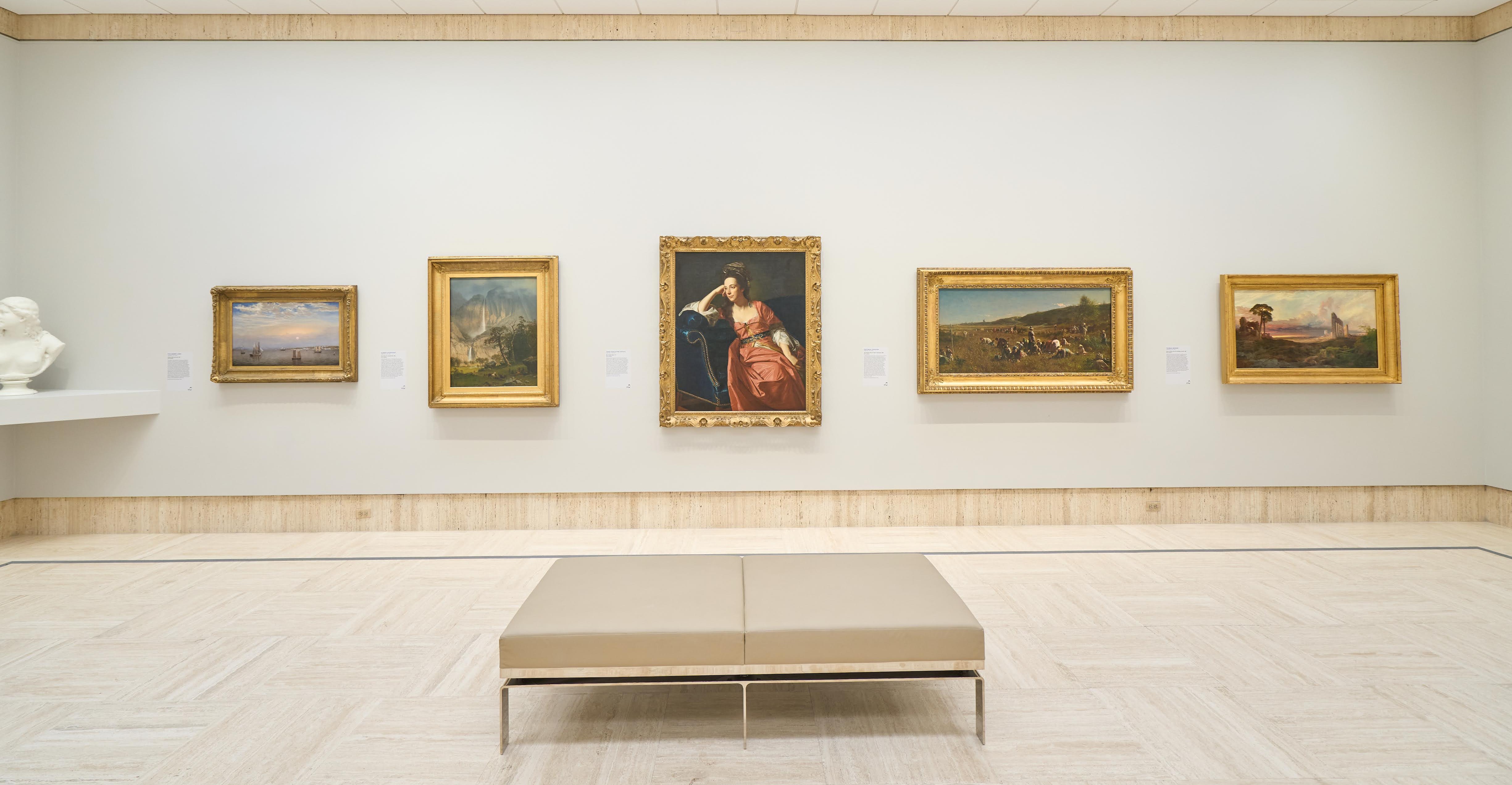
Visitors are invited to compare Born's intricate vaulting systems and structural studies with depictions of architecture in the Timken's permanent collection galleries, creating a dialogue between the buildings themselves and the paintings they inspired, sheltered, and shaped.
About the Timken Museum of Art
Located in the heart of Balboa Park, the Timken is the only free fine art museum in the park and one of the most beloved small museums in the country. The Putnam Foundation collection spans seven centuries of art history, from early Renaissance European masters to 19th-century American paintings and a distinguished collection of Russian icons. Founded in 1965 through the generosity of the Timken and Putnam families, the museum welcomes visitors of all ages and backgrounds to experience world-class art at close range, always FREE of charge.
Visitor Information
Timken Museum of Art
Hours: Wednesday - Sunday: 10am-5pm
Perennially FREE Admission
timkenmuseum.org

Timken Museum of Art
1500 El Prado
San Diego, CA 92101
GET DIRECTIONS >
ADMINISTRATIVE OFFICE
LOCATION & HOURS
Get Directions >SIGN UP FOR OUR NEWSLETTER
Subscribe >


FOLLOW US

.png)